
dragon.XPF · Oracle & APEX
Modern login.
Control access.
Connect identities.
Authentication and authorization from a single source: dragon.XPF connects passkeys, TOTP, and existing user directories with a flexible permission model for your Oracle APEX applications.
Discover features- Passkeys & TOTP.
- For Oracle & APEX.
One foundation. Clear access rules.
Authentication
The right login.
For your applications.
Complex requirements call for more than standard mechanisms. dragon.XPF integrates modern login methods and existing user directories into your Oracle APEX applications – even without Single Sign-On.
Passkeys
Modern, username- and password-free authentication using passkeys. This provides your users with a convenient alternative to traditional password entry.
TOTP & MFA
Additional security with time-based one-time codes (TOTP). Google Authenticator, Microsoft Authenticator, and other compatible TOTP apps are supported. MFA can be configured on a per-application and per-user basis.
LDAP & AD
Connect Active Directory via an LDAP connector. Users can log in using their Windows domain credentials and be imported from the directory.
FORMS
Utilize standalone user management with FORMS authentication. LDAP and FORMS can be used in parallel; imported users can also log in via FORMS or passkeys.
Modern login and existing infrastructure – combined in dragon.XPF.
Integration & Connectors
Existing structures.
Modern integration.
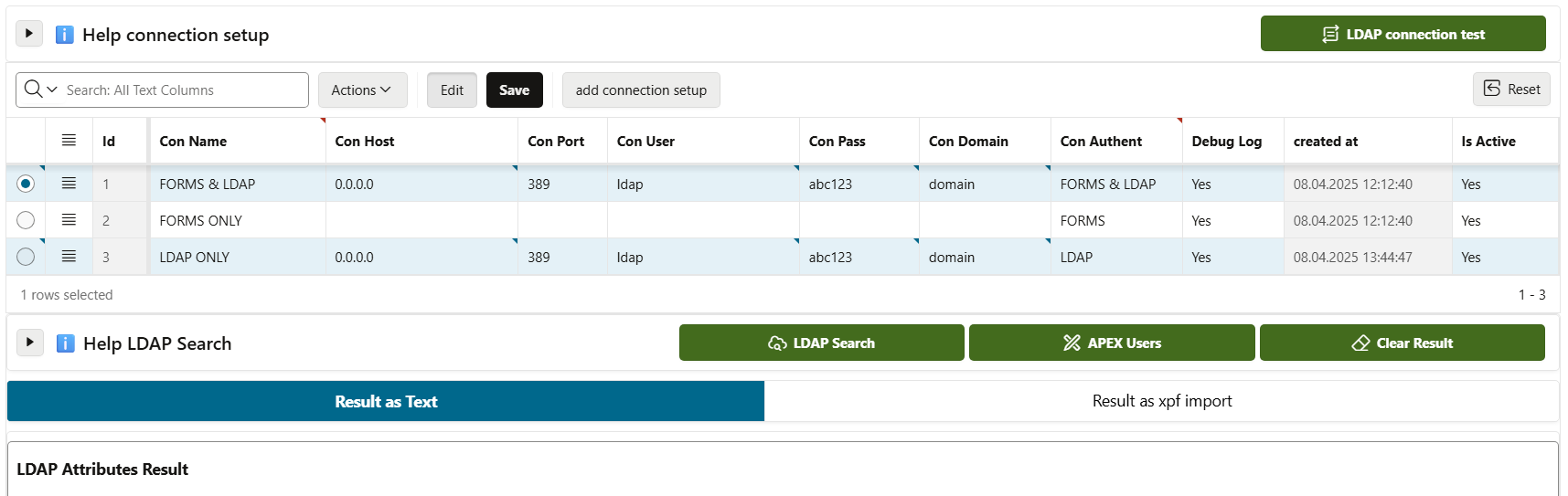
Integrate dragon.XPF into existing Oracle APEX applications. Various connectors per user and combinable authentication methods enable integration into your existing system landscape.
The LDAP Test Center supports the verification of queries using search base, scope, and filters. Individual password complexity rules can be defined for each connector.
Authorization & User Management
Clear rights.
Transparent structures.
Groups. Roles. Objects.A unified administration concept.
- 01 / Structure
Groups and Roles
Roles are formed from permission objects, and groups are formed from roles. This allows you to map even complex permission structures as applications and user numbers grow.
- 02 / Assignment
Individual Permissions
Grant rights via groups and roles or assign individual permission objects directly to a user.
- 03 / Transparency
Effective Permissions
View the rights that are actually in effect within the user profile. The “Effective Permissions” section makes the result of all assignments transparent and easy to trace.
- 04 / Synchronization
Keep APEX Objects Up to Date
Permission objects are automatically synchronized with your APEX applications. New components are detected, and objects that no longer exist are removed.
- 05 / Control
Targeted Access Control
Manage APEX components that support an authorization scheme. You can also control the editing of Interactive Grids using read-only permissions.
- 06 / Administration
Overview of Assignments
View users assigned to a role or group, check the usage of permission objects, and add or remove users directly within the respective view.
Insights into dragon.XPF
One interface.
A complete overview.
User management, profiles, as well as groups and roles follow a unified concept. Open the screenshots to view the individual screens in full size.
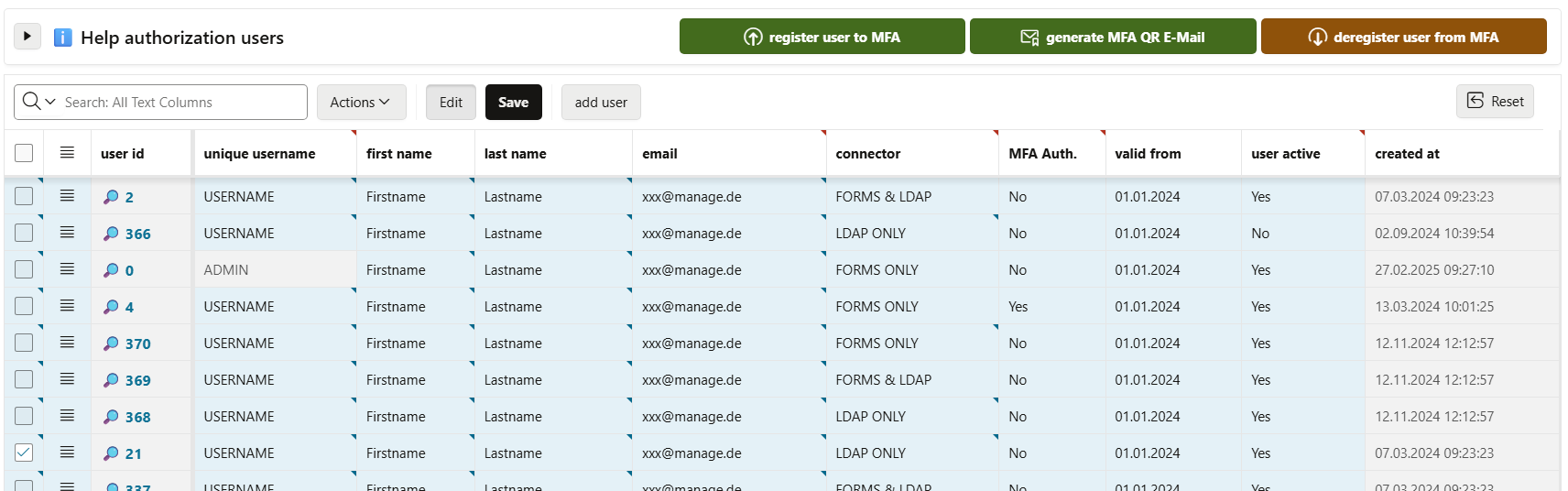
Centrally manage users
Keep track of users and their assignments – with support for various connectors per user.
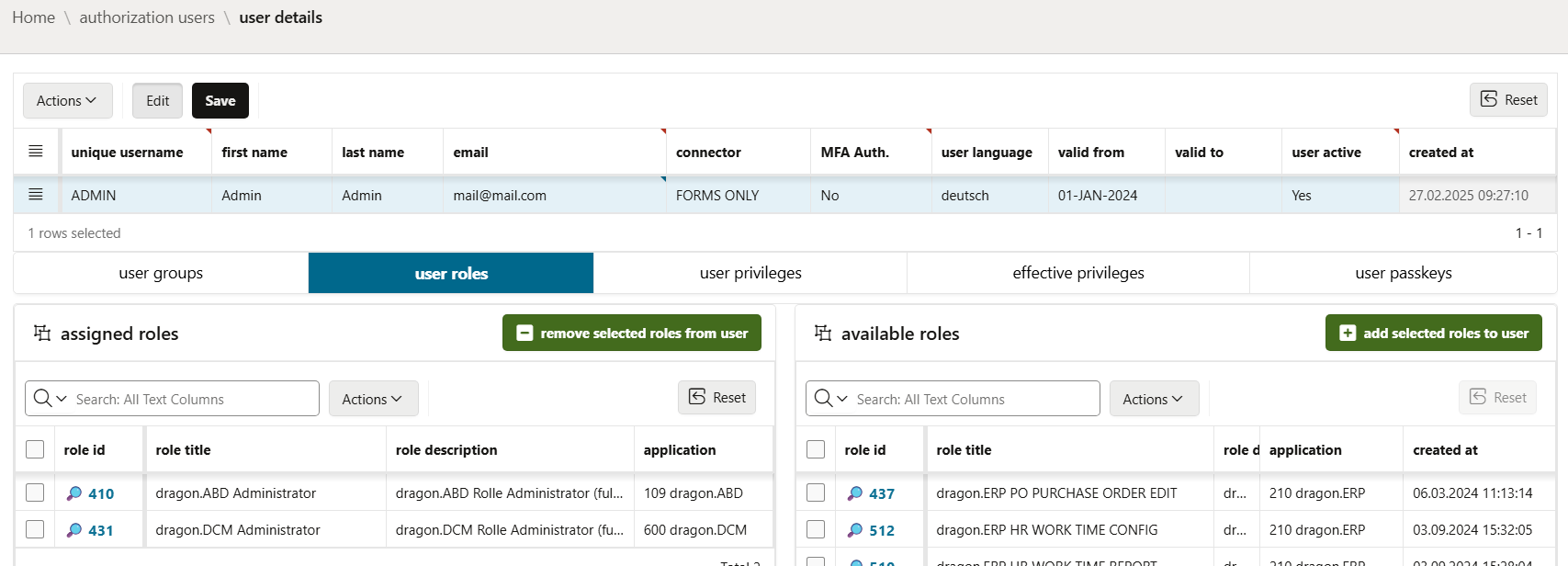
Trace effective rights
Examine groups, roles, individual authorization objects, and the resulting effective permissions.
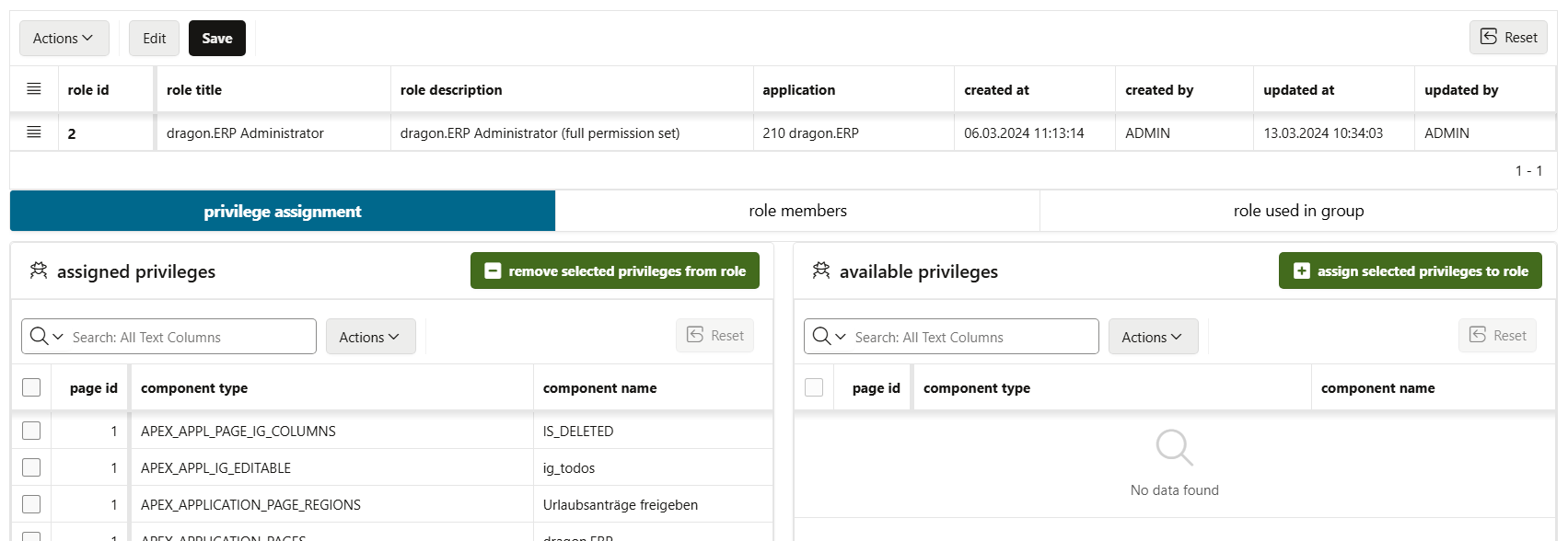
Structuring Permissions
Bundle permission objects into roles and roles into groups. Membership details remain visible at all times.
Permission Objects
From the application
down to the individual component.
dragon.XPF uses permission objects based on the APEX standard. In principle, you can manage any APEX component that supports an authorization scheme.
Structures
Application, Page, Breadcrumb Entry, List Entry, and Page Branch.
Components
Interactive Grid, Interactive Grid Column, Page Button, Page Chart Series, Page Interactive Report Column, Page Item, Page Region, and Page Report Column.
Processes
Application Computation, Application Process, Page Computation, Page Dynamic Action, Page Process, and Page Validation.
Technical Presentation
Get to know
dragon.XPF.
Insight into dragon.XPF
Learn more about the concept and how to work with dragon.XPF in our technical presentation.
Watch presentationYour next step
Modern authentication.
Tailored authorization.
Do you want to integrate passkeys, TOTP, or a comprehensive authorization model into your Oracle APEX applications? Discuss your requirements with us.
Get advice on dragon.XPFSchertlinstr. 39
86159 Augsburg, Germany